Home/Martial arts

Martial arts

Judo, karate, aikibudo, kobudo and Daito-ryu. Technique and fitness, but just as much control, respect and discipline — at every level and at every age.

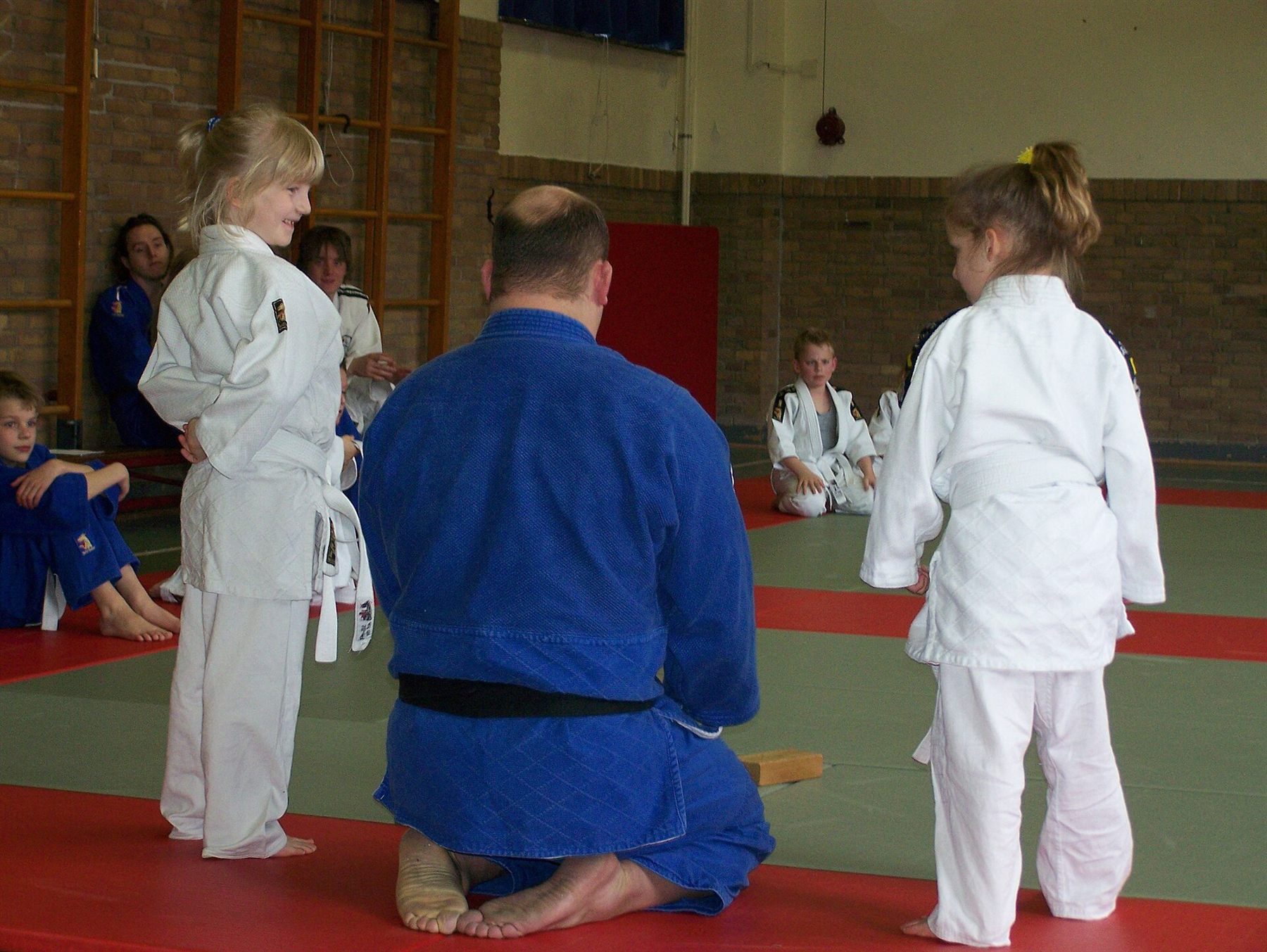
Children during a judo class (illustrative photo)

From age 6

Judo for juniors

  • Wednesday 15.00 – 16.00 · ages 6–9
  • Wednesday 16.30 – 17.30 · ages 10–12

A judo class lasts just under an hour. The first ten minutes are for free-play judo: the children can burn off their excess energy and all reach the same level of attention. So those ten minutes really are part of the class.

Next come introductory exercises that playfully familiarise the children with how the class is organised and with discipline: crawling, rolling, walking and standing, all in the form of games. Then come the preparatory exercises — breakfalls, judo rolls, crawling drills for groundwork — and after that we work towards a judo technique, as far as possible through a method of play and learning. The class ends with a game in which what has been learned is put into practice straight away.

The groups are roughly divided by age, but we look just as closely at a child’s mental and motor development. Every six months — just after the Christmas holidays and just before the summer holidays — there are belt-tab gradings during normal class times.

What does your child need? For the first classes, long tracksuit bottoms and a long-sleeved T-shirt are enough. No jewellery and no chewing gum (safety), clean hands and feet, and short nails. Judo suits are available from us, including a thin belt — it stays in place better and is safer when falling. Practise getting dressed and tying the belt at home beforehand.
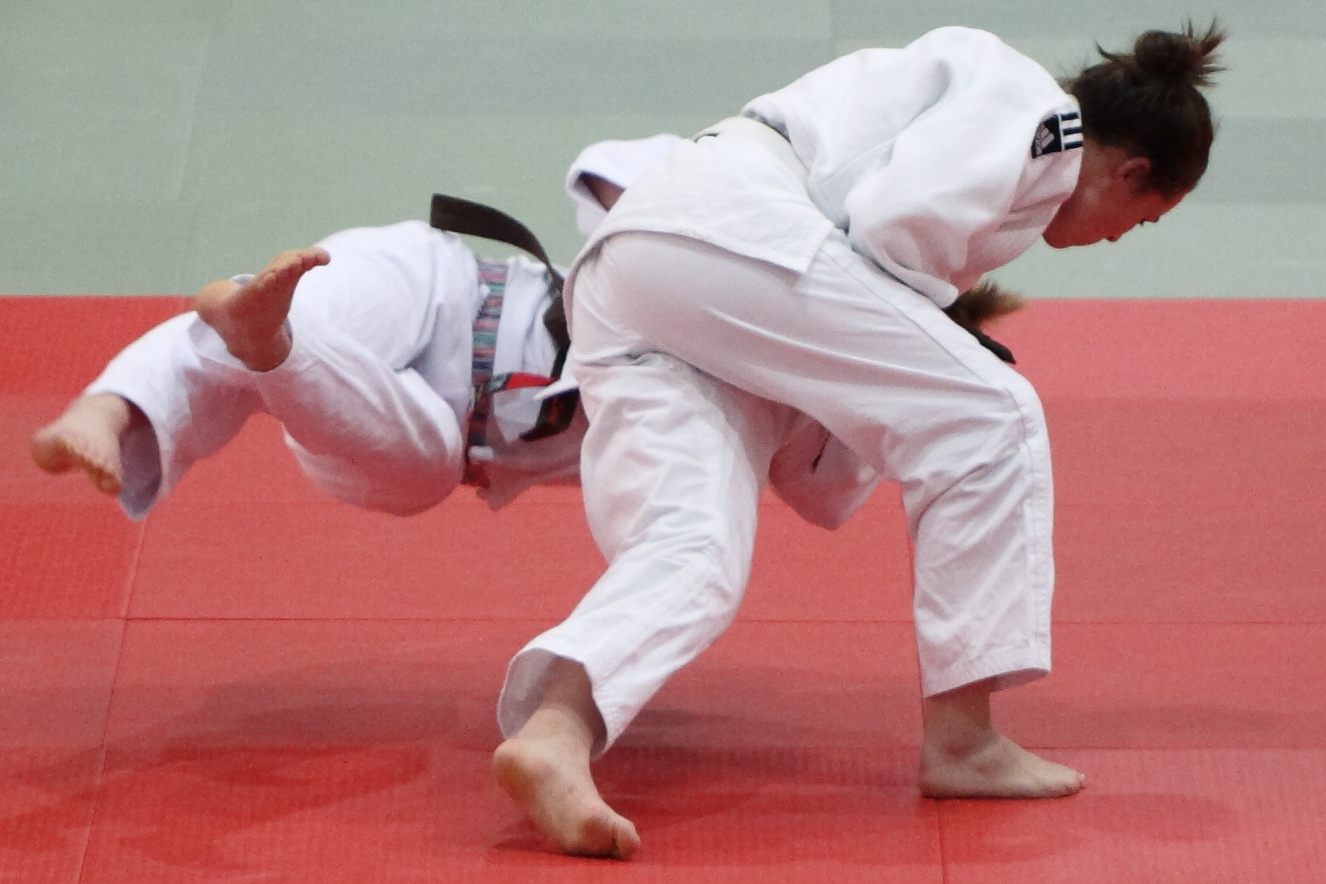
Judo throw (illustrative photo)

Never too old

Judo for adults

  • Wednesday & Friday 20.00 – 21.00

Did you do judo as a child and want to take it up again? Or have you never done judo and like the idea, but think “I’m too old”? You’re never too old. Just go for it.

The classes are structured so that young and old alike can follow them. Falling techniques — very important in judo — are taught in such a way that you have learned to fall before you know it. And we have a nice soft mat.

In the classes we train techniques only, building up to a solid foundation, so you can join in at your own level. Randori and competition training take place at separate times, on a voluntary basis.

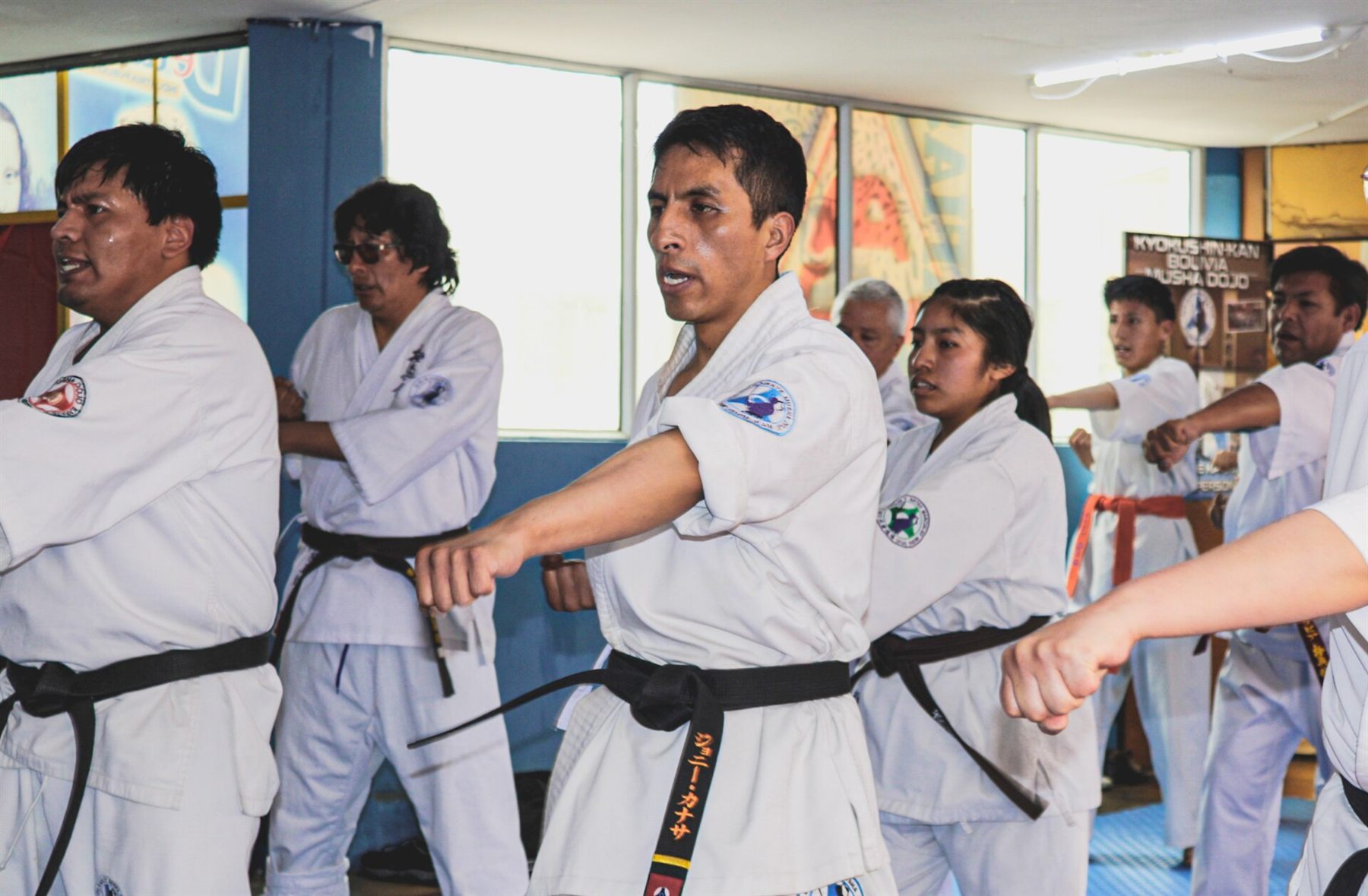
Karateka practising a punching technique (illustrative photo)

Wado-ryu karatedo

Karate

  • Monday 19.30 – 20.30 · age 9 to adult
  • Tuesday 18.00 – 19.00 · juniors, from age 6
  • Tuesday 19.00 – 20.00 · age 9 to adult
  • Friday 21.00 – 22.00 · orange belt and up

A martial art for young and old. Anyone can practise karate: you don’t need to be especially supple or strong, and you don’t need to be able to run up a wall either, the way you sometimes see in films.

The style practised here is Wado-ryu karatedo. Its founder, Otsuka Hironori, attained the highest grade (menkyo kaiden) in Shindo Yoshin-ryu, an old jujutsu school. He studied the karate (tode) of Okinawa and, after twelve years of study, developed his own style: a combination of jujutsu and karate techniques. The karate instructors at our school had the privilege of attending one of his seminars in person before he died in 1982.

The Wado style is characterised by natural stances, reacting from a relaxed position and a yielding defence. For children from age 6 it is a wonderful art of movement in which control, respect and discipline come first. Just walk in and join in — the first two classes are free.

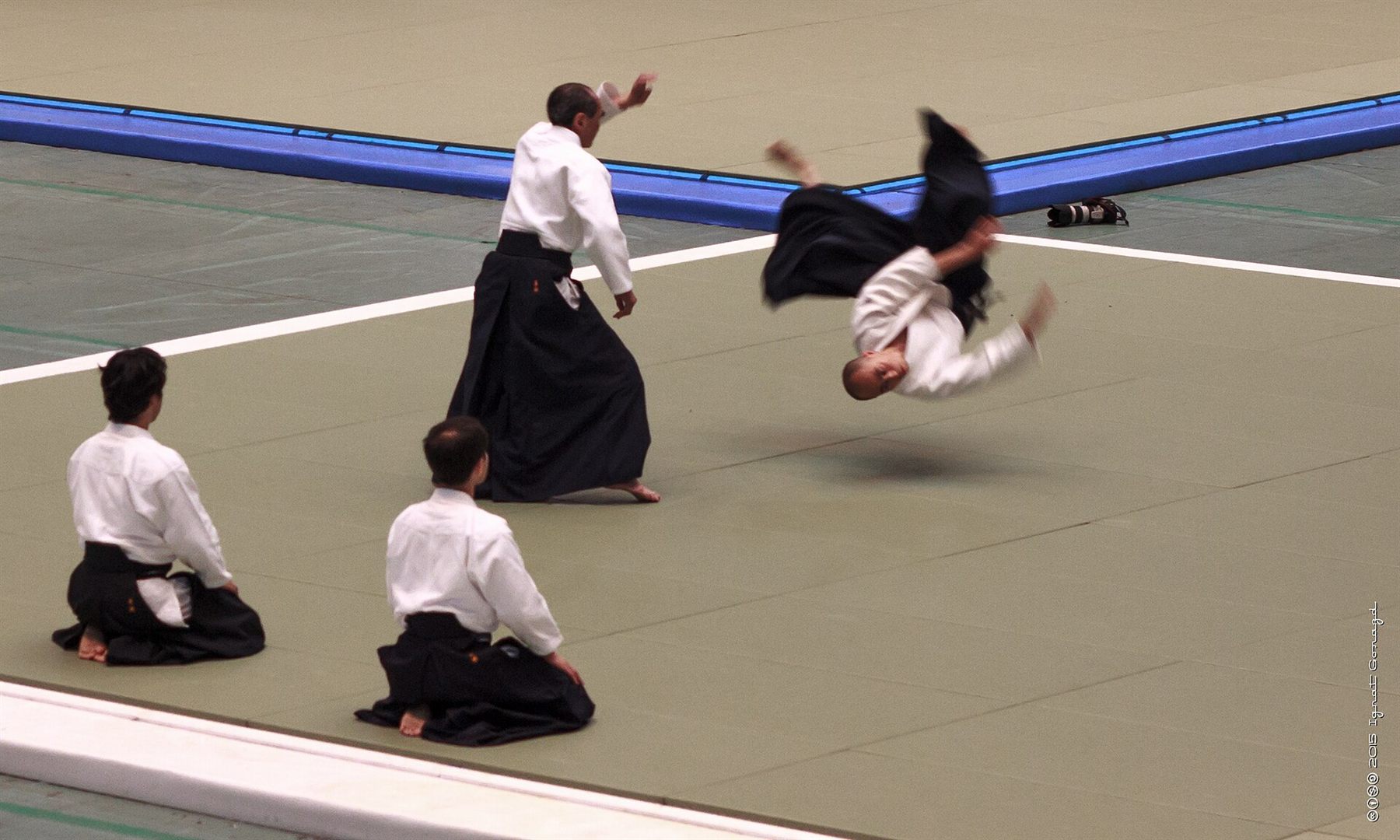
Throw during an aikido demonstration (illustrative photo)

From age 13

Aikibudo

  • Wednesday & Thursday 19.30 – 20.30 · beginners
  • Friday 18.00 – 19.00 · grading practice
  • Friday 19.00 – 20.00 · green belt and up
  • Saturday 11.00 – 12.00 · green belt and up

Aikibudo is an art of defence that makes use of your opponent’s speed and strength: instead of going against them, you go with them. The movements are circular and elegant and seem to take little strength or effort.

We teach in groups at different levels: beginners, intermediate and advanced. We train control techniques, joint locks and throws. Advanced students also learn to handle traditional Japanese weapons, such as the knife, staff (bo) and sword (bokken). For that, of course, you first need a good command of the basic techniques.

Aikibudo has no competitions — the risk of injury is too great, and getting round that would take so many rules that little aikibudo would be left. Is the competitive element exactly what matters to you? Then judo is a better and safer choice. There is hardly any upper age limit: our oldest aikibudoka is well past 60.

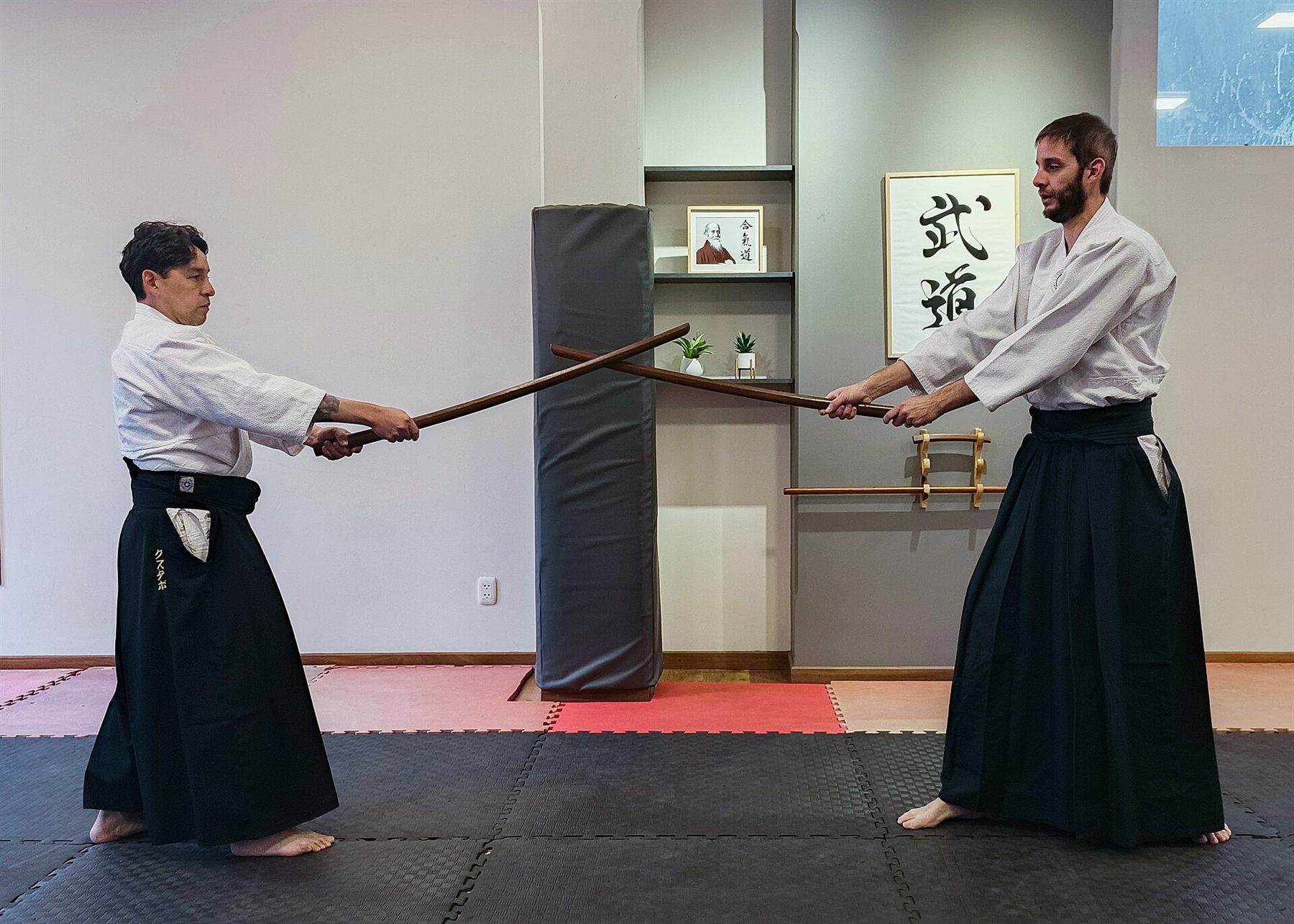
Training with wooden weapons (illustrative photo)

Armed martial art

Kobudo

  • Thursday 20.30 – 21.30
  • Saturday 12.00 – 13.00

Kobudo is an armed martial art that focuses on training with various traditional Japanese hand weapons. To make training safe, all the weapons have been replaced by wooden versions, so an accidental hit does far less harm than it would with a real weapon.

Many techniques from the other martial arts derive, directly or indirectly, from what the samurai developed with these weapons. As a foundation beneath the other styles you can train with us, it is a good addition — and for many people an eye-opener, because in kobudo you see exactly why techniques are the way they are.

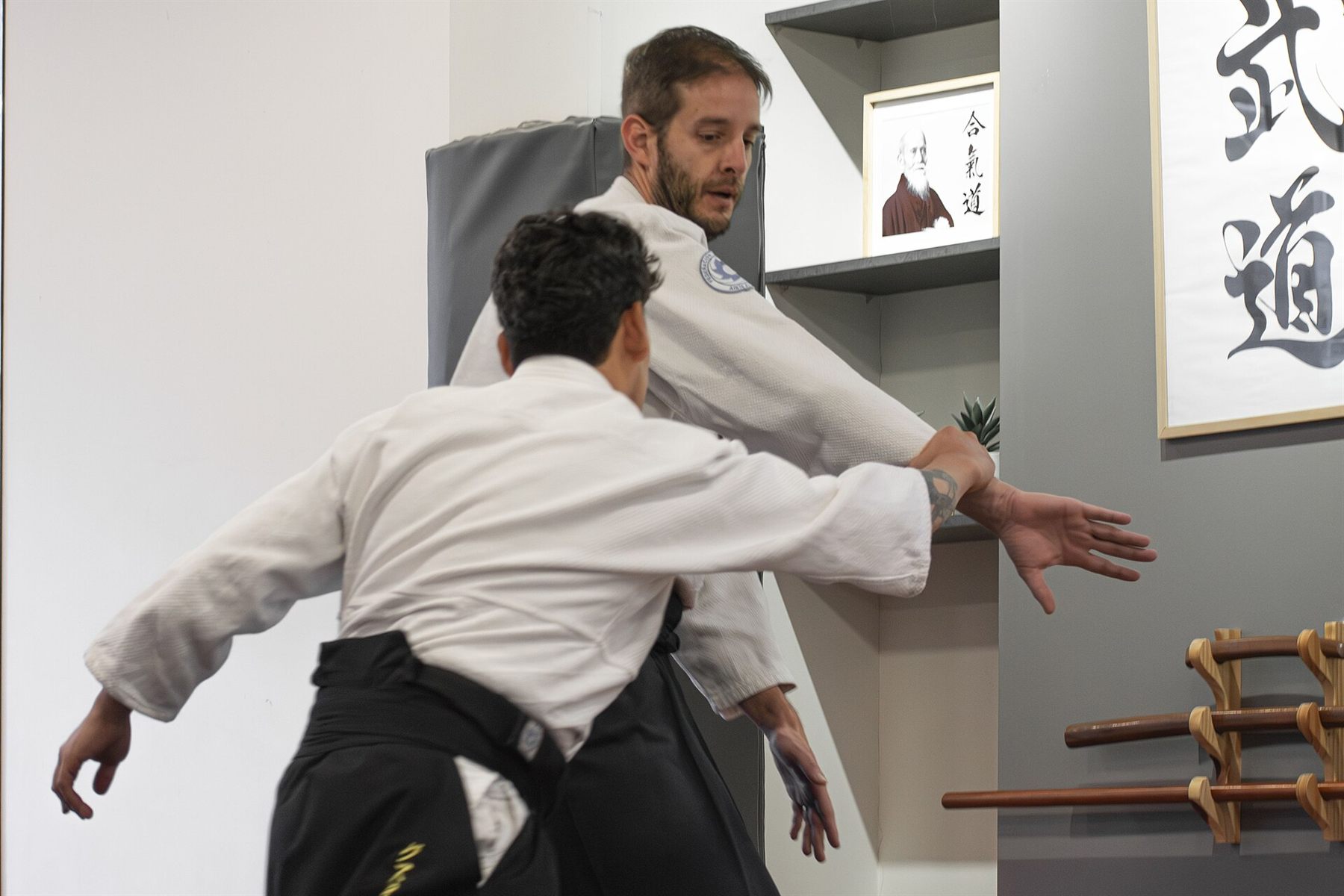
Wrist grab between two practitioners in hakama (illustrative photo)

The source of modern aikido

Daito-ryu aiki-jujutsu

  • Saturday 10.00 – 11.00
  • Seminars on Sunday mornings, every two weeks from 10.30 to 12.00

Daito-ryu aiki-jujutsu is the original source of modern aiki(bu)do. Takeda Tokimune granted Kondo sensei his teaching licence in 1974 and appointed him his official representative (soke dairi) in 1988. For years we have been travelling to Japan to train with Kondo sensei. That way we get our knowledge straight from the source. Our school belongs to that main line and is one of the few in Europe.

The seminar classes are suitable for anyone who has never done this form before. They also prepare you for the aikibudo dan gradings: for second dan you can choose to show Daito-ryu techniques as your kata, and from third dan onwards they are part of the grading. If you want to learn the techniques to support your budo development, you are just as welcome. Some experience in another martial art is desirable, though.

Want to join us? Email [email protected].

Classical swordsmanship

Katori Shinto-ryu

  • Class times on request

Tenshin Shoden Katori Shinto-ryu is one of the oldest surviving martial arts schools in Japan, with the sword at the heart of the system. Want to know when and how you can join? Just get in touch with us.

Ask about the options

Still not sure?

Come and join in

The first class is free, and for karate even the first two. You don’t need a suit or any experience — tracksuit bottoms and a long-sleeved shirt are enough.